Know what part of the probe measures
Some digital instruments sense near the tip, while others average over a longer section of the stem. Read the device instructions before relying on a number. A thick dial thermometer may not suit a thin hamburger even if its temperature scale is appropriate. Required insertion depth and response time determine whether it can measure that particular food meaningfully.
Clean the probe as directed before use. A washable metal stem does not mean the display housing or cable may be submerged. An instant-read instrument should remain in the cooker only if specifically designed for that purpose. The probe's measuring range and the body's heat resistance are different specifications; a high number on the former does not protect a plastic handle.
Find the center without touching the wrong object
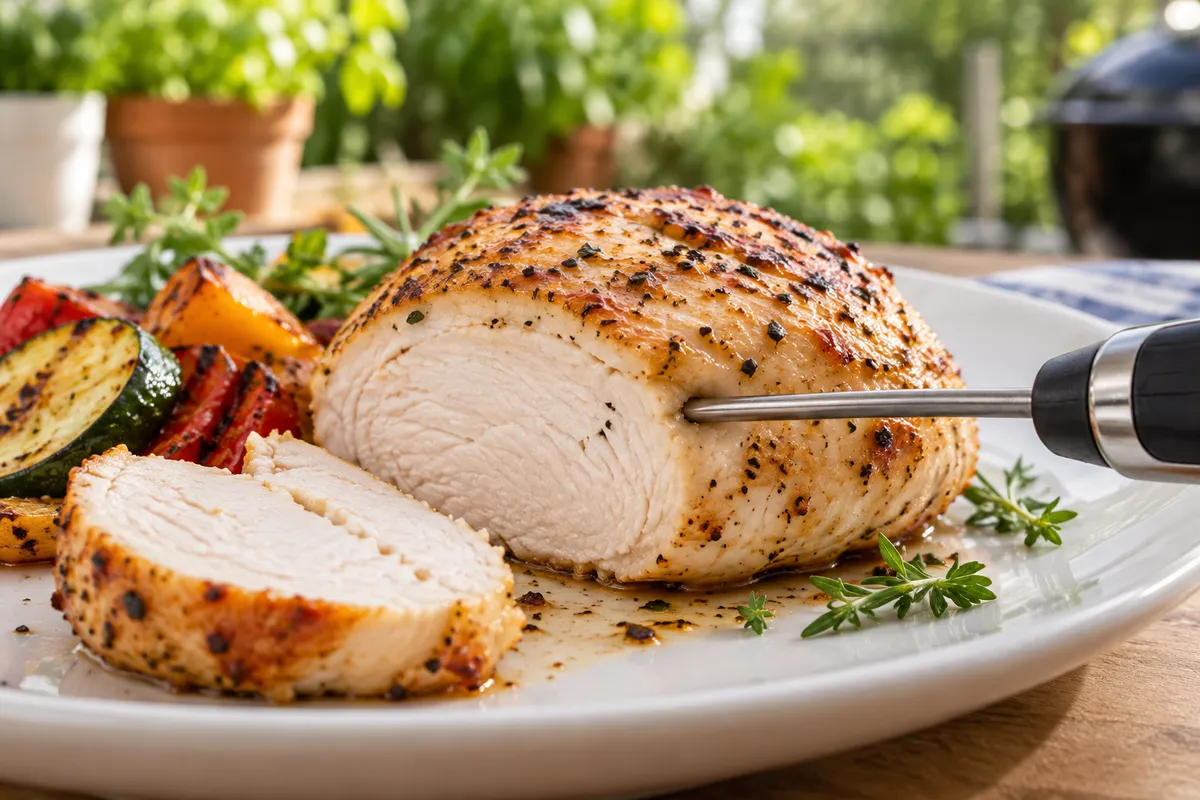
For a thick, evenly shaped cut, aim for the center of the thickest part. Avoid direct contact with bone, substantial fat pockets, the grate or a skewer. Those materials can give a different reading from the surrounding meat. Check more than one substantial area of an irregular chicken piece, keeping the sensing tip away from the bone.
Insert from the side for many thin foods so the sensing area sits halfway between the top and bottom surfaces. Position the food safely with an appropriate utensil rather than balancing it above flames. If the food is too thin for the instrument's required sensing length, choose a more suitable probe. Do not invent a temperature correction to compensate for measuring partly in the air.
Use the lowest credible reading
Wait for the reading to stabilize as described by the maker. Where suitable for the probe, move slowly through the center to locate a colder area. A substantially lower second reading is not something to dismiss because the first number was more convenient. Check the placement and continue cooking if the relevant part has not reached its required temperature.
USDA guidance calls for 145°F plus at least a three-minute rest for whole beef, pork, lamb and veal cuts, 160°F for ground versions, and 165°F for poultry. Fish needs 145°F. Reach the applicable minimum before removing the food from the heat; do not assume an uncertain amount of carryover will rescue an undercooked center. Surface browning cannot replace this check.
Keep repeated checks hygienic
Clean a probe that has contacted undercooked food before using it in finished food or a ready-to-eat side. Keep an appropriate cleaning method nearby and do not return the instrument to the raw-food plate. When checking several portions, include irregular shapes and pieces from different grate positions rather than testing only one convenient sample.
Unexpected readings warrant checking the battery, connections, visible damage and insertion location. A second suitable thermometer can help resolve uncertainty. Perform any calibration or reference test according to the instructions; an incorrectly prepared ice bath is not a precise accuracy test. Protect the clean, dry tip during storage so it does not become bent or damaged between cookouts.
Use grilling equipment only in its intended location and follow the manufacturer’s instructions. Timing is not a substitute for checking doneness.