Even thickness reduces last-minute corrections
Choose and prepare portions with reasonably consistent thickness. A substantial middle attached to a paper-thin end is difficult to cook evenly. Separate dramatically different parts when appropriate and cook them individually. Do not flatten meat arbitrarily just to give every portion the same outline; that changes its cooking behavior and handling again.
Pat the surface dry and remove thick clumps of marinade. Use seasoning that will not burn before the center is safely heated. Separate the raw landing area from the clean serving platter, particularly when several small pieces finish in quick succession. Put suitable utensils and the thermometer within reach before loading the grate so you are not searching while the food cooks.
Keep each batch manageable
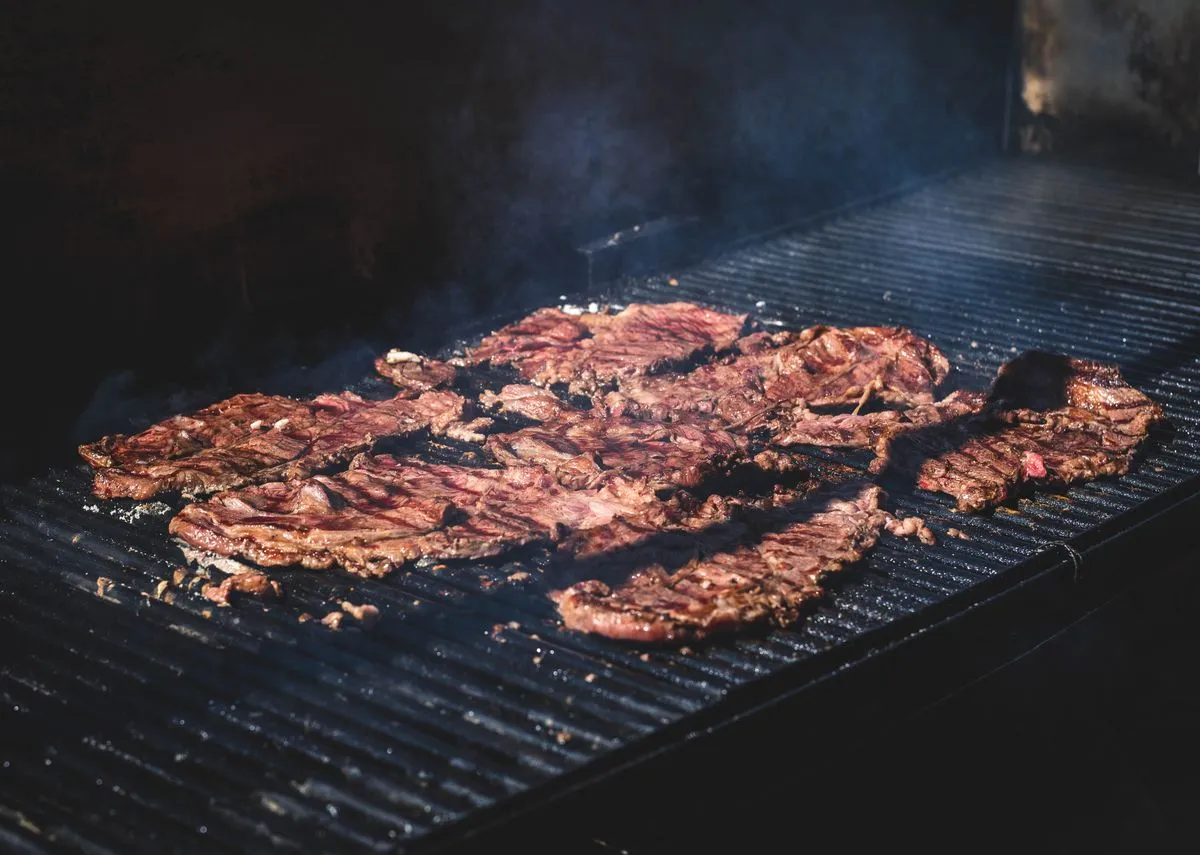
Use a properly preheated direct area at a heat appropriate to the ingredient and leave an escape zone available. Do not cover every inch immediately. With several portions, retain a clear sense of which went on first and which have been turned. A consistent loading order can help, provided you also account for hotter and cooler grate positions.
Turn with a suitable tool without squeezing the slices. Controlled repeated turning is possible; the number of turns matters less than the heat exposure. Once the surface is browned, it does not need more direct contact merely to improve a decorative pattern. Move it if the center needs additional cooking, or transfer it to the clean platter once safely done.
Measure a thin center properly
A slender, responsive probe can often enter from the side. Its sensing area must fit fully within the relevant middle layer. A long-sensing dial thermometer may not be suitable. If the instrument cannot obtain a meaningful measurement, change the instrument or portion thickness; the color of a cut surface is not an equivalent safety check.
Serve thin cuts promptly because their substantial surface area loses heat quickly. An extended pause intended for a large roast rarely suits them. Have the sides ready and cook in clearly defined rounds for a larger group. That keeps the first portions from sitting around while you struggle to fit the final pieces onto an overcrowded grate.
Use grilling equipment only in its intended location and follow the manufacturer’s instructions. Timing is not a substitute for checking doneness.