Identify the surface before scrubbing
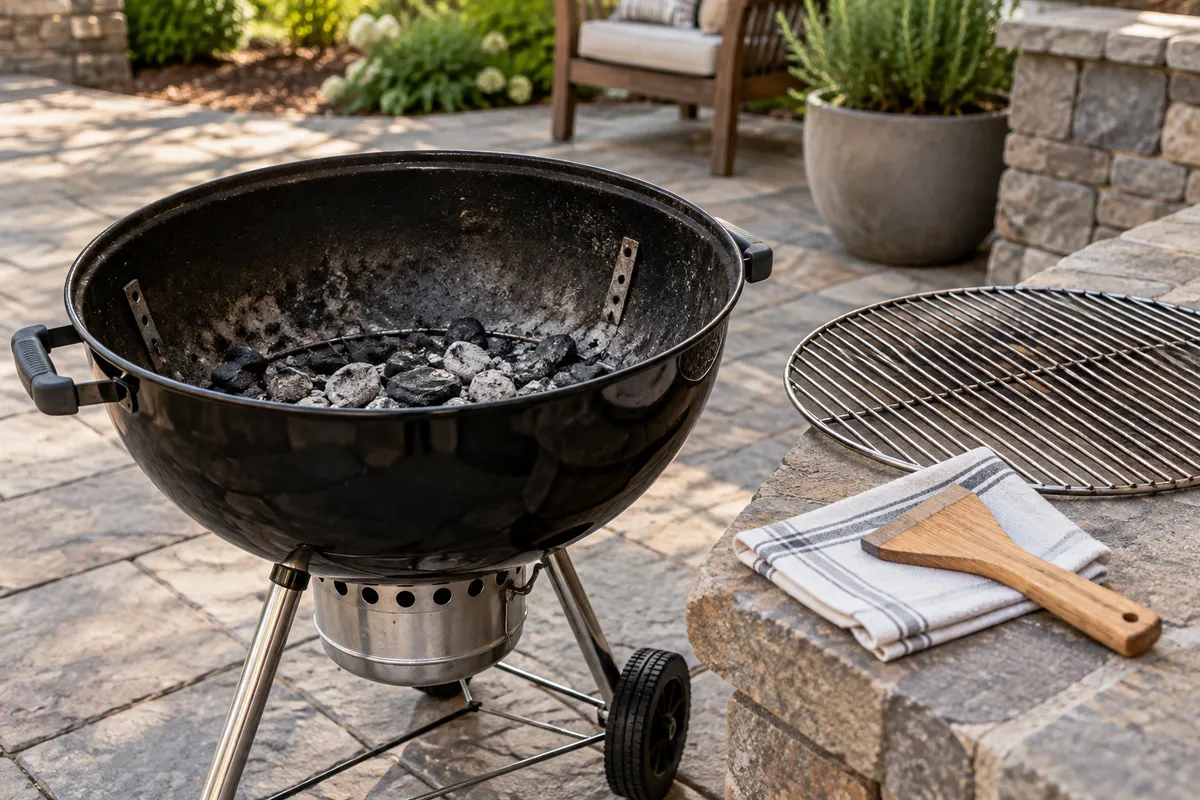
Read the manufacturer's material description. A dark cooking surface is not necessarily bare seasoned iron: many grill grates have an enamel coating. Those surfaces need different care from an uncoated griddle and can be damaged by sharp scrapers or abrasive cleaning compounds. If the finish is unclear, consult the manual rather than scratching an inconspicuous area as an experiment.
Seasoning on suitable bare iron is a thin, bonded layer of oil, not a sticky accumulation of old cooking fat. Applying more oil will not repair chipped enamel. If a coating is flaking or shedding pieces, ask the manufacturer whether replacement is needed. Food should not be cooked on a surface that transfers loose fragments when you move a spatula across it.
Clean, then remove the moisture
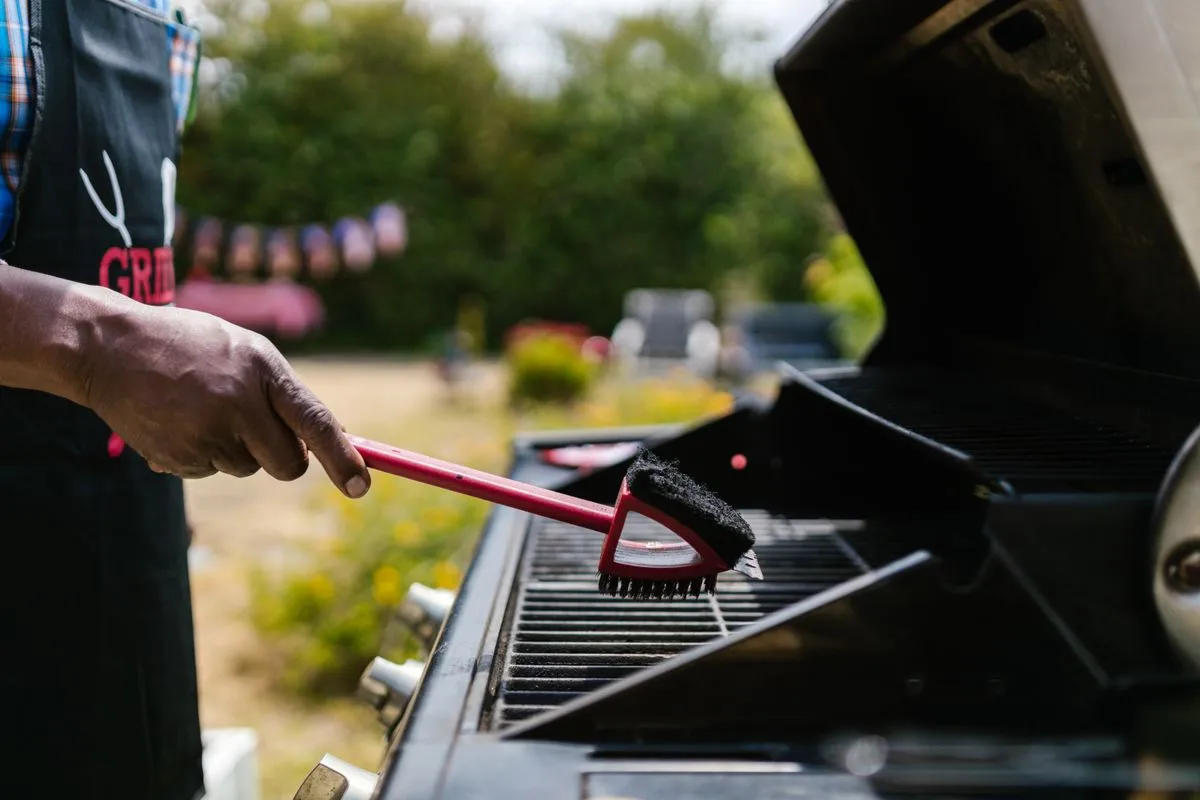
Loosen food with a tool approved for the surface. Follow the product's cleaning directions; extended soaking is generally unhelpful for bare cast iron because water can remain in small recesses. Mild modern dish soap is acceptable for many uncoated products, but the manufacturer's instructions take priority. Leaving everything greasy does not make the equipment hygienically clean or protect it in a controlled way.
Dry the underside, corners and handles as well as the visible cooking area immediately after washing. If brief warming is recommended to drive off moisture, remain nearby and let the item cool in a controlled way afterward. Do not pour cold water onto a very hot heavy plate to speed up the job. Sudden temperature changes can damage the metal or its coating and are not a useful cleaning shortcut.
Keep seasoning thin and storage dry
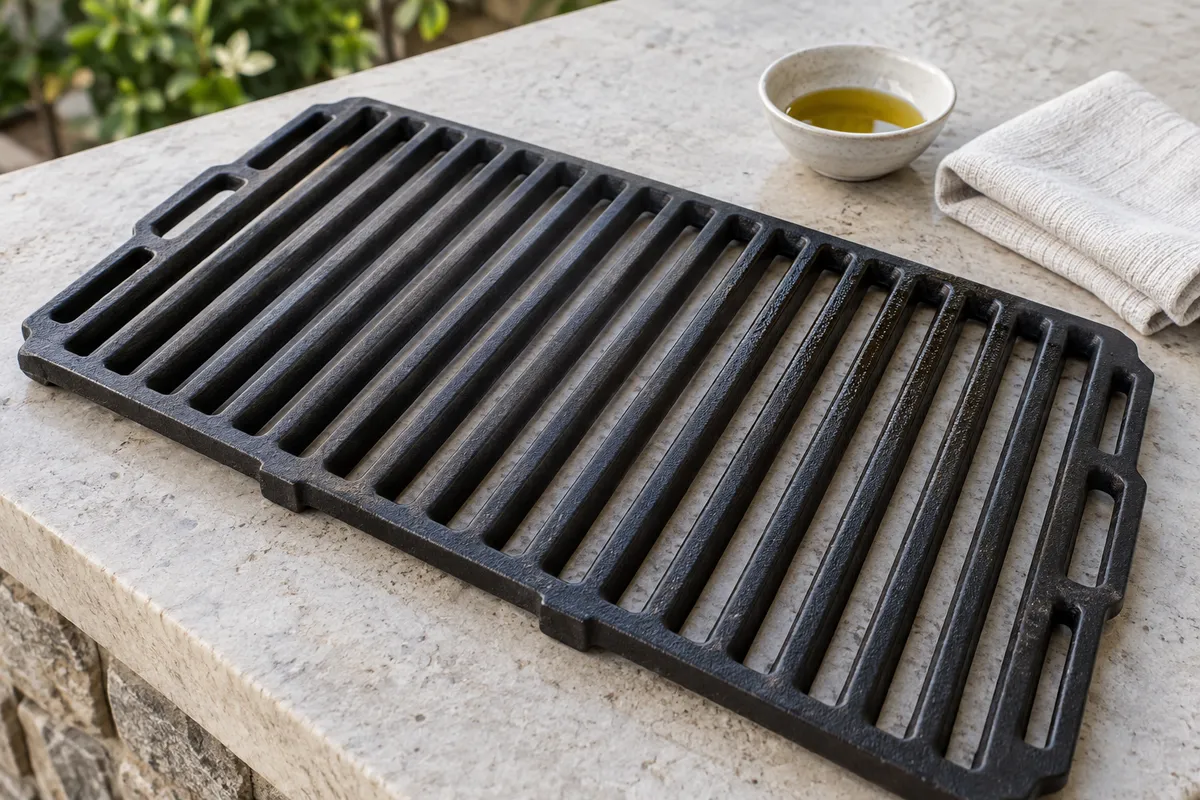
Where bare iron is intended to be oiled, spread a very thin layer of suitable cooking oil and wipe away the excess. There should not be a puddle or thick sheen left on the surface. Follow the recommended seasoning temperature and sequence instead of selecting the highest heat available. Handles and finishes on the underside may limit how the entire piece can be heated.
Store the dry surface where moisture cannot collect beneath it. Some light surface rust on bare iron can be removed and the piece reseasoned under the maker's directions, while deep damage or rust beneath enamel needs a different assessment. Before cooking again, check for sticky deposits, loose particles and retained moisture. The goal is a stable, clean cooking surface, not an increasingly black layer of grease that conceals the condition of the metal below.
Use grilling equipment only in its intended location and follow the manufacturer’s instructions. Timing is not a substitute for checking doneness.