Plan what can be removed
Work outdoors with a completely cold appliance. Turn the controls off and close the fuel supply. Follow the manual on whether and how to disconnect the cylinder before cleaning. A quick photograph of the grates, heat shields and drip pans can make reassembly easier, particularly when several similar pieces fit in slightly different positions.
Remove only parts identified as user-serviceable for routine cleaning. A burner is not an ordinary tube, and its openings must not be enlarged with a drill or improvised tool. Do not dismantle valves, regulators or gas lines to reach a dirty area. Cracks, significant corrosion or damaged connectors are reasons to stop and arrange suitable service, not to hide the problem under a freshly cleaned cooking surface.
Follow the grease path
Start immediately below the cooking grate and work downward. Heat shields may hold dry crusts while softer grease accumulates in the cookbox beneath them. Use a material-appropriate scraper to direct deposits toward the collection system without pushing debris into burner ports. Remove the tray carefully afterward; a layer of apparently solid grease can still conceal liquid underneath.
Choose cleaning products approved for each material. Aluminum, enamel-coated steel and stainless steel can respond differently to aggressive cleaners. Abrasive powders and hard tools may damage a protective coating. Flooding the cooker with water is not a shortcut either: ignition systems, electrical parts and burners need protection from inappropriate soaking. Wash only the components intended for that treatment, and remove cleaner residue from every food-contact surface before use.
Reassemble before relighting
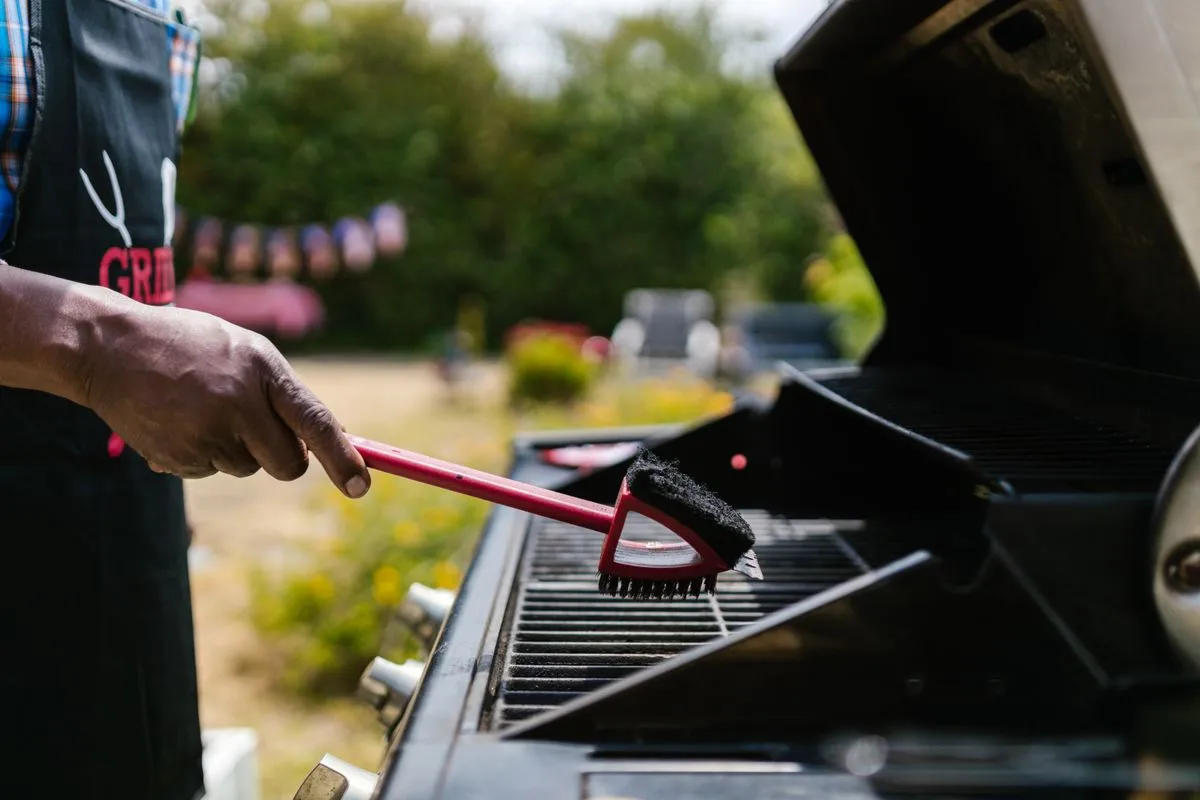
Let cleaned components dry, then refit them in the arrangement shown in the manual. Heat shields need to sit correctly to manage drippings, and the collection tray must not obstruct the grease outlet. Check side shelves and fasteners, and make sure no cleaning cloth, packaging or brush has been left inside the cookbox.
If a gas connection was disconnected, carry out the prescribed leak check before operating the grill. Never use a flame to find a leak. Light the appliance with its normal lighting procedure, not by allowing extra gas to build up. An unusual gas odor, abnormal burner behavior or repeated flame failure calls for shutdown and investigation by an appropriate service professional. A clean grill is ready for food only when it is also correctly assembled and operating normally.
Use grilling equipment only in its intended location and follow the manufacturer’s instructions. Timing is not a substitute for checking doneness.