Follow the equipment's checking schedule
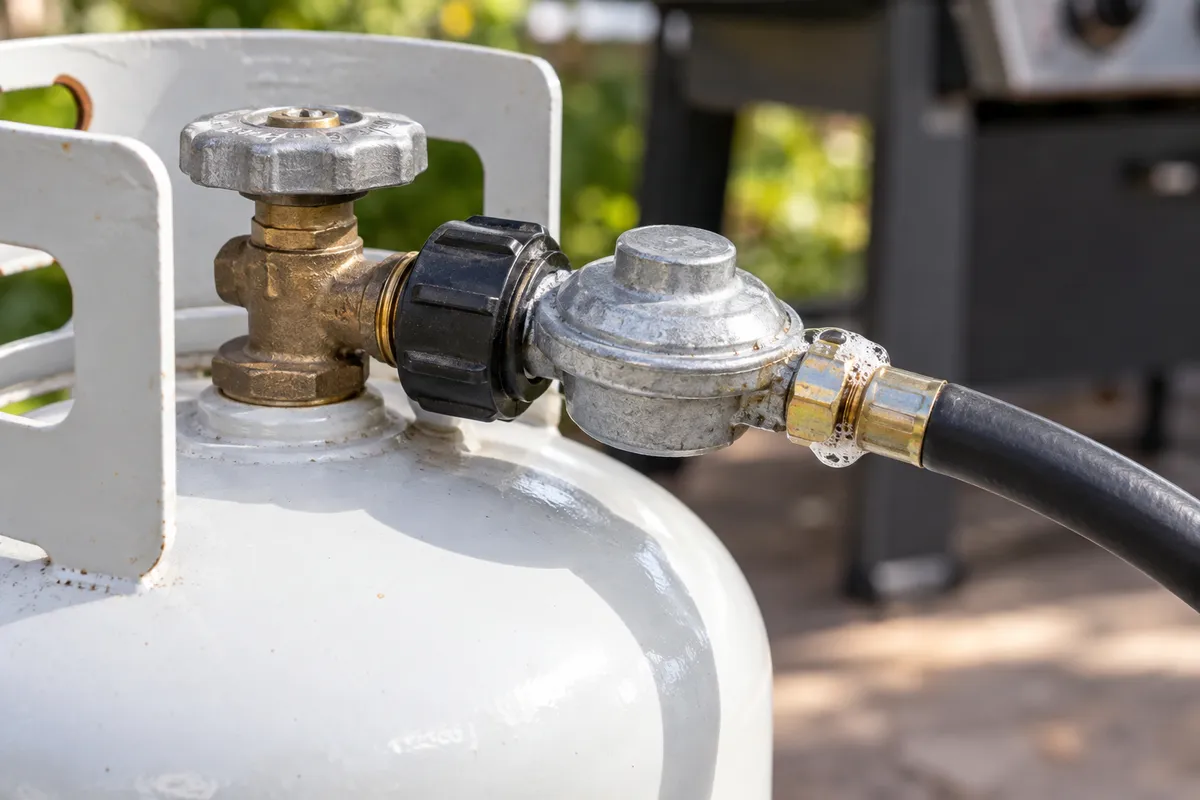
Read the instructions for both the grill and its fuel supply before connecting them. Checks may be required after a cylinder change, a disconnected fitting or a period of storage. The regulator, hose and cylinder must match the appliance and the approved connection system. A similar-looking thread or a collection of adapters does not establish compatibility.
Work in a suitable, well-ventilated outdoor location without flames or other ignition sources. Set the controls as the manual directs and prepare the leak-detection product it specifies. This article does not provide a substitute sequence for every grill model. Its purpose is to explain the boundaries of the task and the point at which an owner should stop using the system rather than continue troubleshooting during a cookout.
Treat a suspected leak as a stop signal
Check only the accessible connections identified by the manual, using its prescribed method. Never use a match or lighter to find escaping gas. If the procedure indicates a leak, close the supply if it is safe to do so. Do not attempt to light the burner at the same time to find out whether the appliance might still work despite the suspected problem.
If there is a strong gas odor, keep people away and avoid ignition sources or operating electrical switches in the affected area. Follow the emergency instructions from the equipment maker or fuel supplier. If the situation cannot be controlled safely or gas continues escaping, move away and contact appropriate emergency help from a safe location. An uncertain fuel system should not remain in use merely because dinner is already prepared.
Do not improvise fitting repairs
Damaged seals, brittle hoses and suspect regulators require appropriate approved replacement or professional assessment under the manufacturer's guidance. Do not wrap arbitrary sealing tape around a connection or apply adhesive to stop an apparent leak. Different fitting designs seal in different ways, and extra material can prevent a connection from working as intended.
When the instructions permit a correction and require another check afterward, complete that check before lighting the appliance. A successful test is not a permanent guarantee that the system can never leak. Keep hoses away from hot surfaces and sharp edges and inspect their condition regularly. Contact the manufacturer or a qualified service professional when uncertain. Leaving the grill off and cooking by another method is a valid outcome, not a reason to push past an unresolved safety concern.
Use grilling equipment only in its intended location and follow the manufacturer’s instructions. Timing is not a substitute for checking doneness.