Metal brings shape choices and hot handles
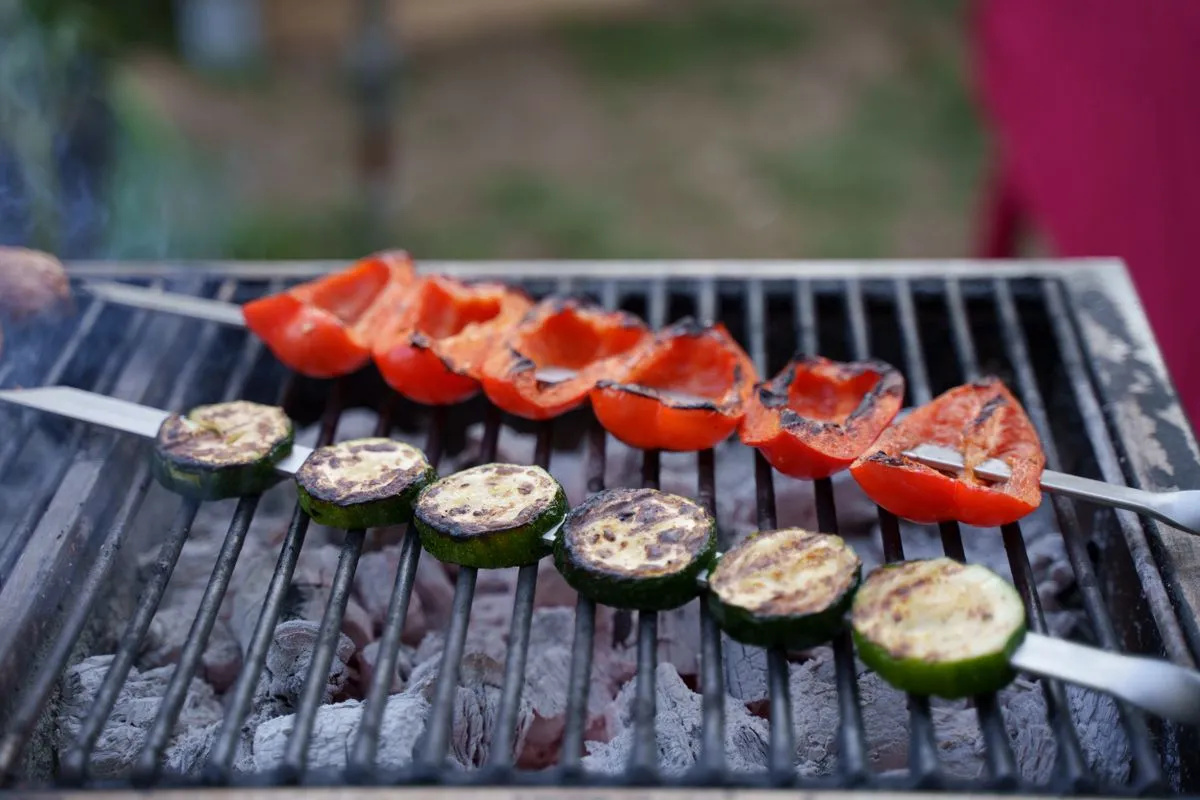
Flat metal skewers can reduce the tendency of soft pieces to spin during turning. Round versions suit other uses but may not hold loose ingredients in the same orientation. Inspect sharp edges, secure ends and overall length. An excessively long shaft is awkward if it prevents the lid from closing as intended.
Metal conducts heat toward the handle too. Treat more than the section directly above the fire as potentially hot. Plan suitable hand protection and safe serving. When measuring meat temperature, keep the thermometer away from the metal shaft so the reading represents the food rather than contact with the skewer.
Wood preparation does not make it fireproof
Use food-grade skewers without splinters or unknown treatments. Follow any specified preparation, including soaking when directed. That does not guarantee protection from burning. Avoid leaving exposed ends above fierce direct heat unnecessarily. The loaded skewer should remain secure enough to turn without the wood becoming damaged or brittle.
Disposable skewers eliminate washing but create waste and require a continuing supply. Very thin versions can break while loading firm ingredients. Work on a safe support and point the tip away from your body. For children or guests who should not handle sharp objects, removing the cooked food before serving is often the better choice.
Match the format to the meal
Short skewers can be easier for small portions, while substantial metal versions require more grate space and turning effort. Do not overload them. Consistent cuts and appropriate spacing matter regardless of material. Separate ingredients with incompatible cooking times rather than expecting the skewer itself to make everything finish simultaneously.
Clean reusable versions as directed and inspect for bent sections or damaged edges before storage. Protect sharp points. A small set that fits your regular meals is more useful than many shapes without a defined role. If vegetables repeatedly spin or collapse, two suitable parallel skewers or a compatible basket may solve the handling problem more effectively.
Use grilling equipment only in its intended location and follow the manufacturer’s instructions. Timing is not a substitute for checking doneness.