Leave room for airflow and support
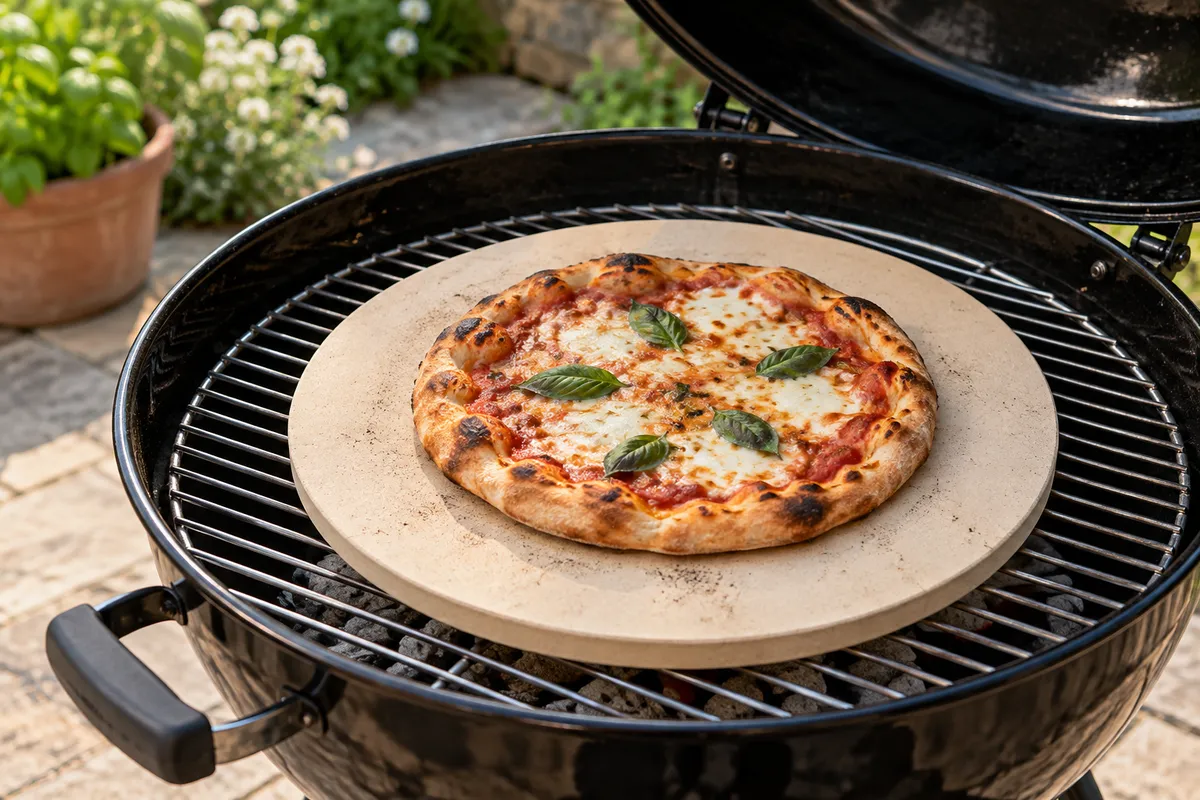
Check approval for the grill type and any required frame or support. An oversized stone can alter the intended airflow. It needs secure support, not a precarious balance on a few unsuitable edges. The lid should close with space above the pizza, and you need an unobstructed route for inserting and withdrawing a peel.
Material and thickness influence weight, warm-up time and stored heat. A substantial stone may hold more energy but requires corresponding preparation and support. Recovery between pizzas matters when cooking several in succession. Greater thickness is not automatically the most convenient choice for a small occasional meal.
Heat it through the specified process
A cold stone normally goes in before the prescribed preheat unless its instructions specify otherwise. Sudden temperature changes can damage it. Do not place frozen food on an unsuitable hot surface or pour water over the stone to cool it. It remains hot long after shutdown and should not be set on a vulnerable countertop.
For the first pizza, observe the bottom and top separately. If the base burns before the toppings finish, simply adding more heat is not the solution. Review the setup, preheat and topping load. Thick or wet toppings extend cooking above while the base continues receiving substantial heat from below.
Plan handling and care
A suitable peel makes loading and unloading easier. Assemble the pizza so it can actually slide free, and practice cold with a simple dough piece if needed. Excess loose flour can burn on a very hot surface. Keep the first attempt manageable instead of making it as large and heavily topped as possible.
Clean the fully cooled stone only as directed. Some porous materials should not be soaked or treated with detergent. Dark usage marks are not necessarily damage, but cracks and breakage need assessment. Provide dry storage where the heavy stone cannot tip over or damage neighboring equipment. These everyday details matter as much as the advertised baking surface.
Use grilling equipment only in its intended location and follow the manufacturer’s instructions. Timing is not a substitute for checking doneness.