Put away a clean, dry cooker
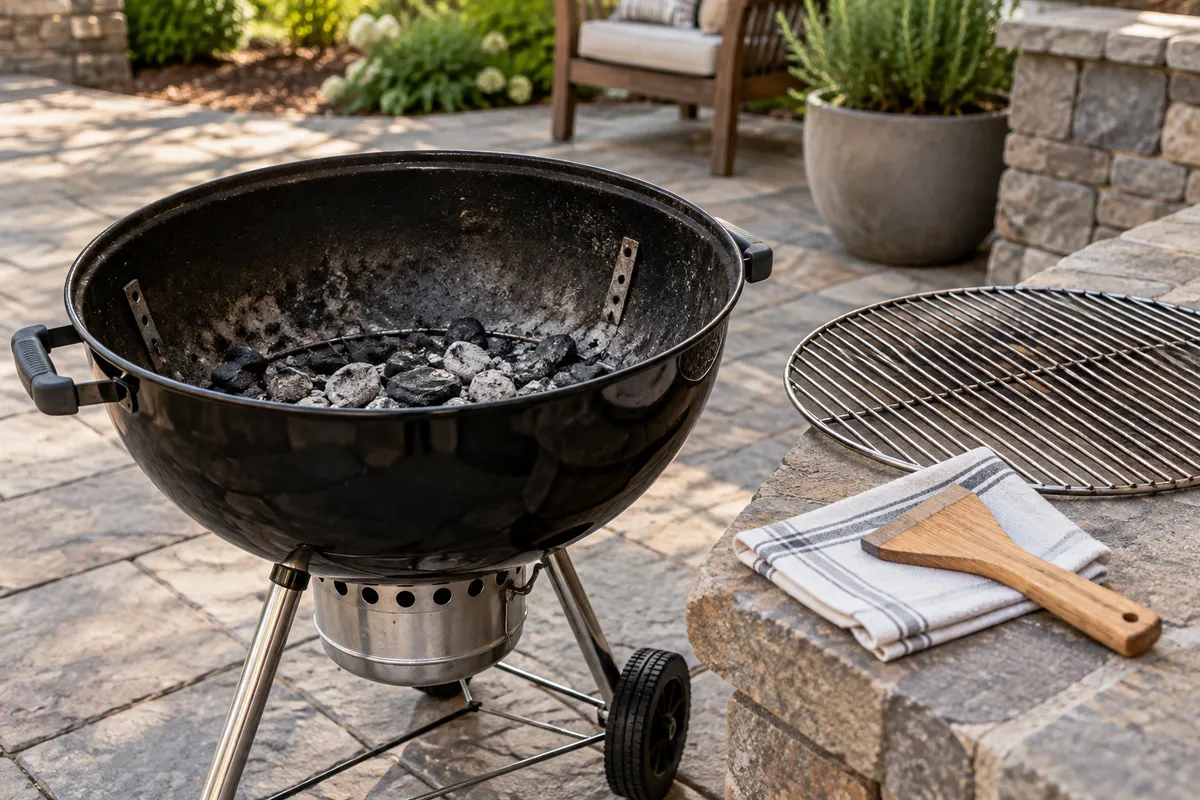
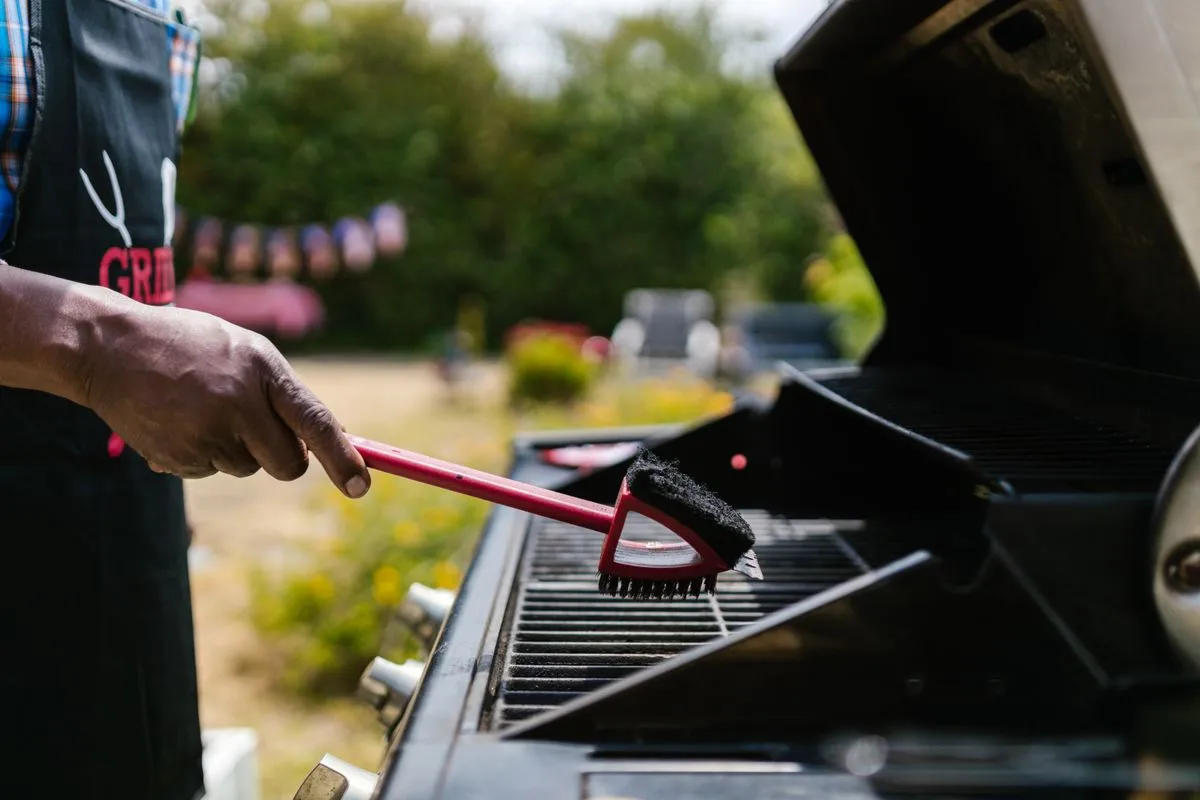
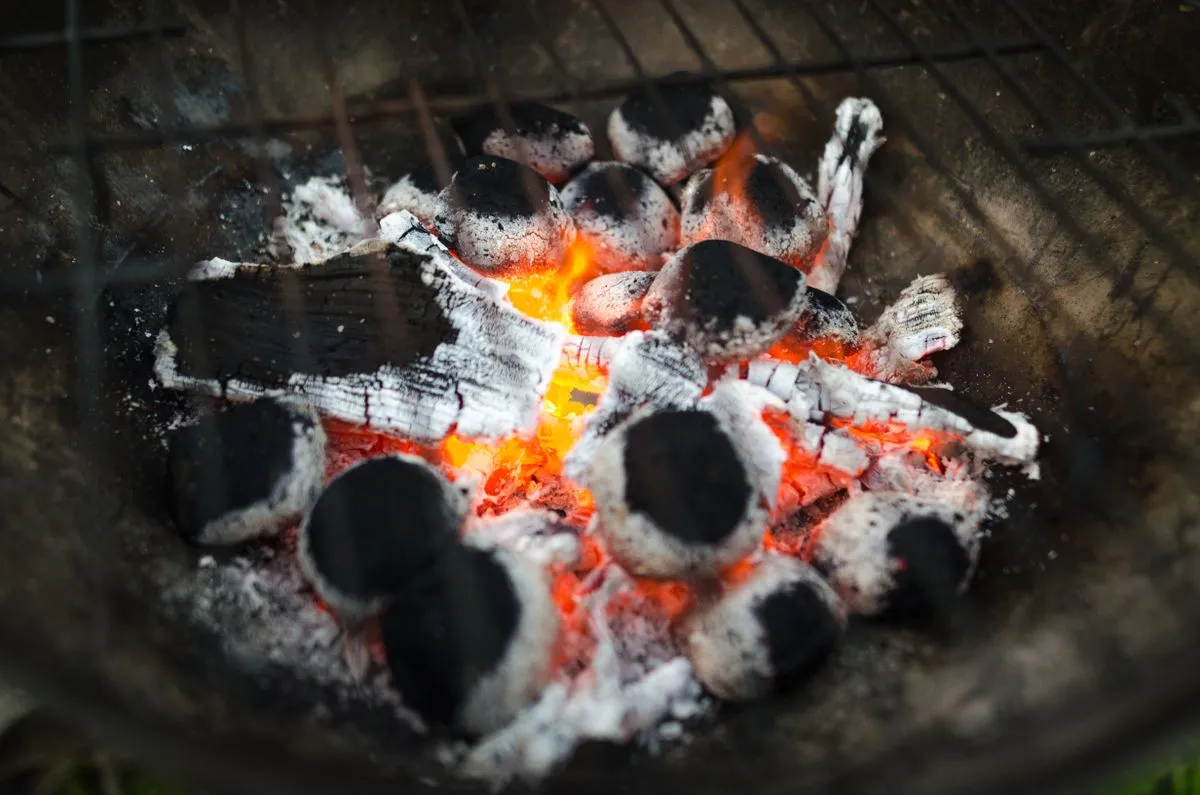
Schedule the final cleaning when every component can dry fully. Remove food residue, grease and completely extinguished ash. A full grease tray will not improve during several months of storage, and damp ash can contribute to corrosion. Follow each material's cleaning requirements rather than using the end of the season as a reason to scrub delicate parts more aggressively.
Dry washed grates, pans and panels thoroughly. Where the maker permits it, protect bare cast iron with a very thin layer of suitable oil, not a thick coating of old cooking grease. Store loose accessories clean and positioned so they do not press against vulnerable surfaces beneath a heavy cover. Photograph or label small removed parts to prevent incorrect reassembly when the weather changes.
Store fuel according to separate rules
A propane cylinder has its own storage requirements. A place suitable for the grill body does not automatically become an acceptable place for the fuel cylinder. Follow the equipment instructions, local rules and the fuel supplier's guidance. Cylinders require an appropriate upright outdoor storage arrangement, away from prohibited heat exposure; do not modify valves or connectors to make an inconvenient storage location work.
Keep charcoal and briquettes dry in suitable storage away from ignition sources. Unplug an electric grill and protect electrical parts from prolonged moisture. Remove batteries from thermometers or ignition systems only as their instructions recommend. Electronic tools should not share a closed storage box with damp cleaning cloths, even when the box is otherwise a convenient place to keep barbecue accessories together.
Check beneath the cover occasionally
A fitted cover should protect the appliance without continuously trapping moisture against it. Put it on only when the grill is cold and dry. Make sure the cooker stands securely and wind cannot rub the cover against a sharp edge. Pools of water on a poorly fitted cover add unnecessary weight to the fabric and supports and are worth correcting rather than leaving until spring.
During longer storage, look occasionally for condensation, nests and developing corrosion without dismantling fuel components. Note parts that need replacement before the next cooking session. In spring, repeat the visual inspection and perform the prescribed checks on gas connections. Storage is not finished merely because the cover has come off; the cooker still needs to be clean, stable and ready to operate according to its instructions before it is lit again.
Use grilling equipment only in its intended location and follow the manufacturer’s instructions. Timing is not a substitute for checking doneness.