Stabilize the fire before adding food
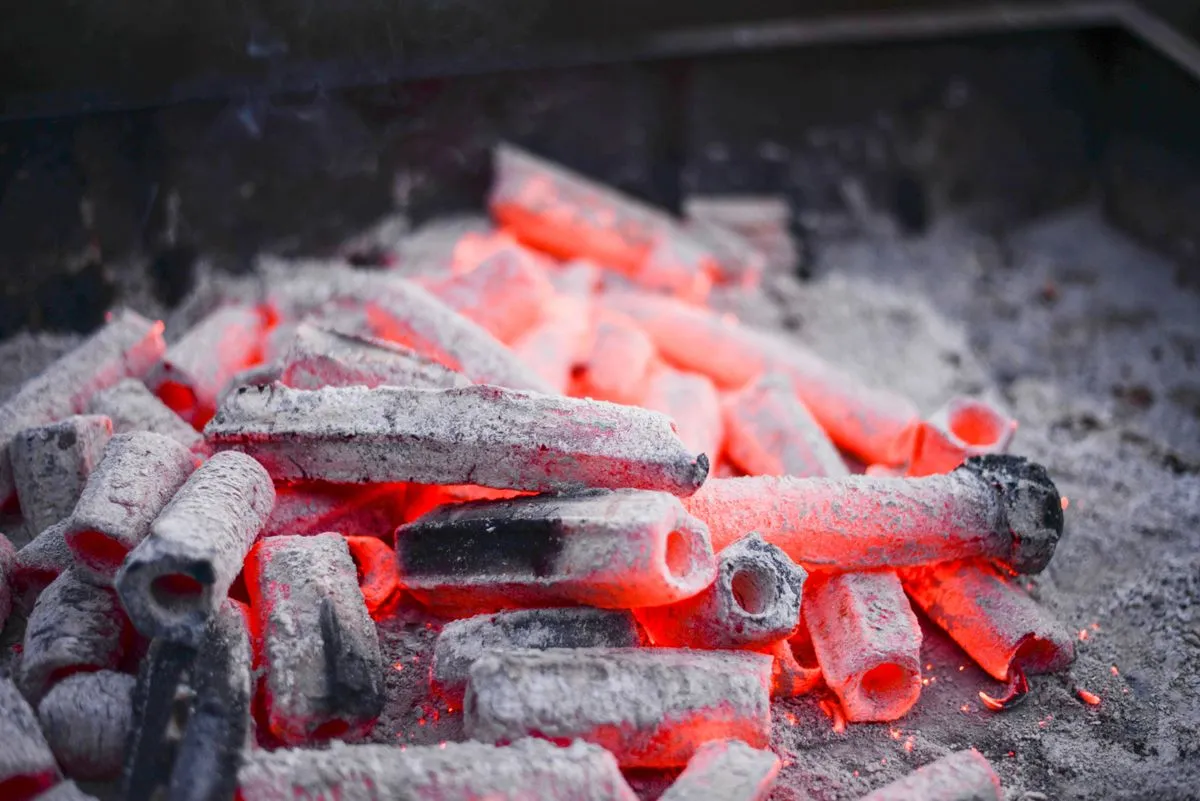
Bring the fuel into operation according to the cooker instructions before loading food. Smoke and smell during ignition may differ from those of a settled cooking fire. Use starters approved for the intended application, and never pour an accelerant onto existing hot coals. A sudden large flame is neither necessary nor evidence that the cooker is producing useful smoke.
Balance air and fuel in the way the appliance is designed to operate. Excessively restricting the fire to force a low temperature can lead to poor combustion, especially after a large wood addition. Small deliberate changes are easier to understand than moving every vent while adding a substantial amount of fuel. Observe the response before making another adjustment so you do not keep chasing the effects of earlier changes.
Smoke appearance is a clue, not a test
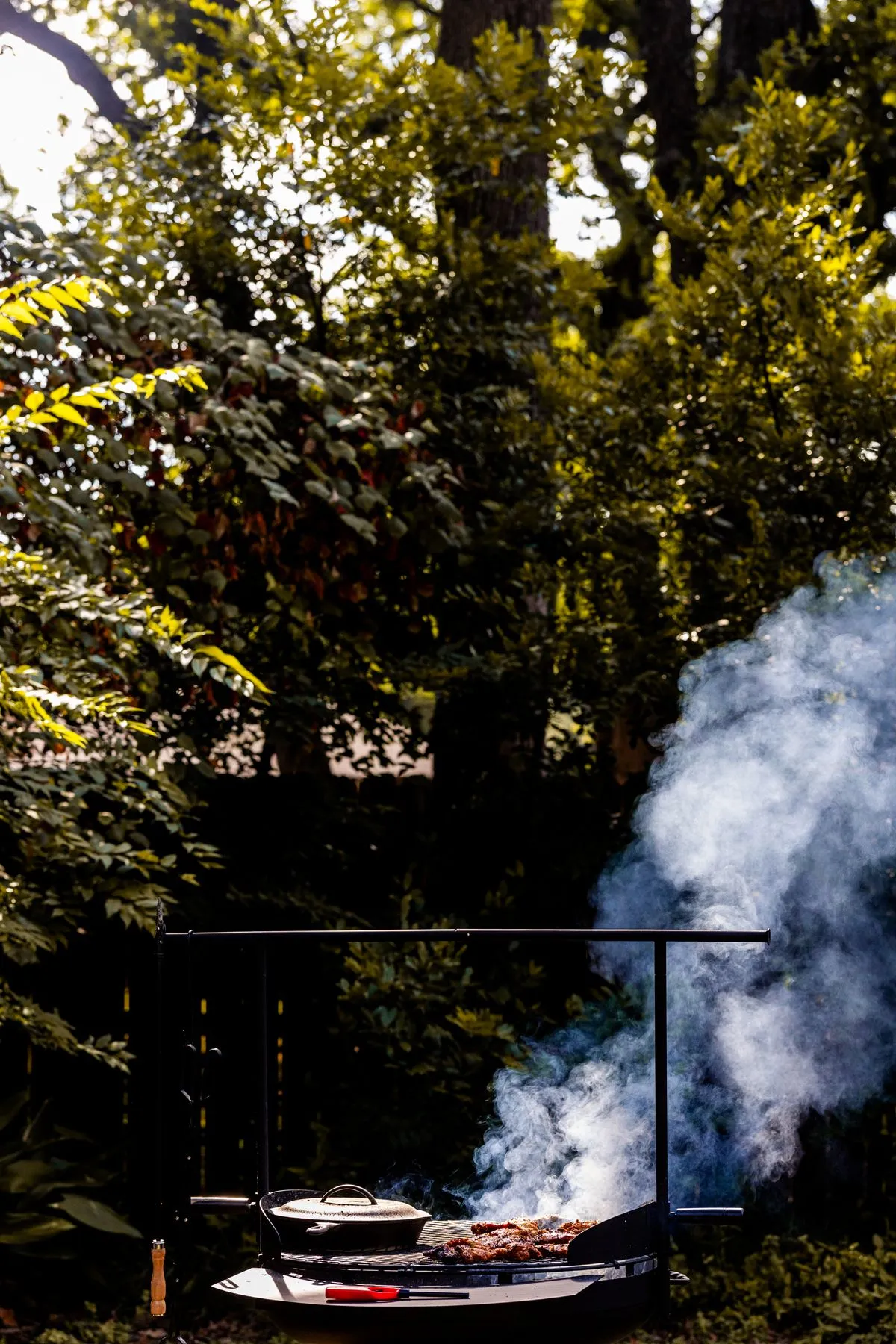
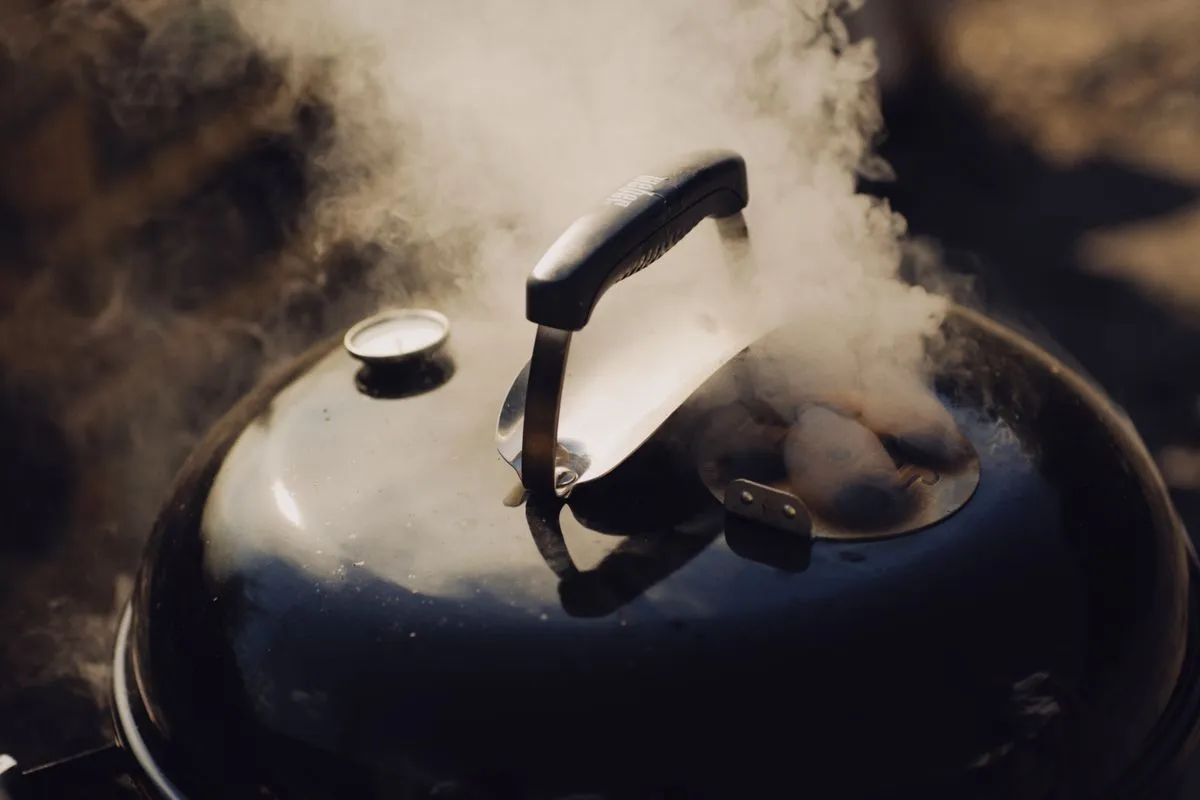
Thin, barely visible smoke can still contribute aroma. Dense smoke with a harsh odor may indicate an unfavorable burn or an excessive fuel load. Color alone cannot establish the absence of harmful substances or prove that food is cooked. Water vapor, lighting and outdoor temperature also affect the appearance of the plume, making a single visual rule unreliable.
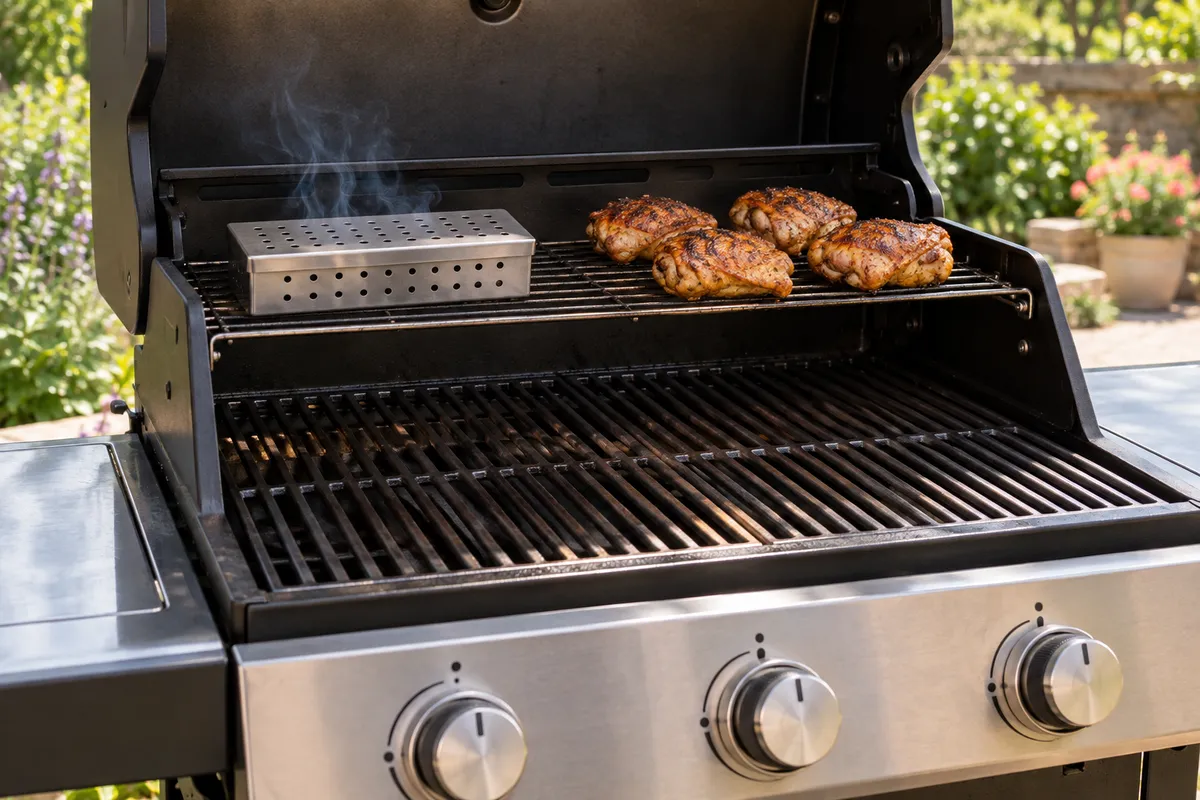
Check for fat dripping onto very hot components as well. Smoke from burning grease is not the same as a measured wood-smoke seasoning. Maintain the grease path and use intended drip pans without blocking airflow. If flames develop, move food to a cooler zone only when it is safe to do so and otherwise follow the equipment guidance. Pouring water onto burning grease is not an appropriate response.
Fix the cause of bitterness
Adding sauce to a bitter, sooty exterior does not correct the fire that created it. Review wood quantity, airflow and grease buildup before the next batch. Remove heavily burned sections rather than presenting a carbonized crust as desirable browning. A browned surface and a black coating of soot are not interchangeable signs of good barbecue.
For a useful next trial, choose less wood and a familiar dish. Record how long noticeable smoke persisted and when additional wood was introduced. Let ordinary cooking heat finish the rest of the process. Smoke does not need to remain visible throughout every minute of a long cook. The worthwhile result is balanced flavor, controlled temperature and safely cooked food, not the largest or most dramatic cloud above the patio.
Use grilling equipment only in its intended location and follow the manufacturer’s instructions. Timing is not a substitute for checking doneness.