Divide the grate into working zones
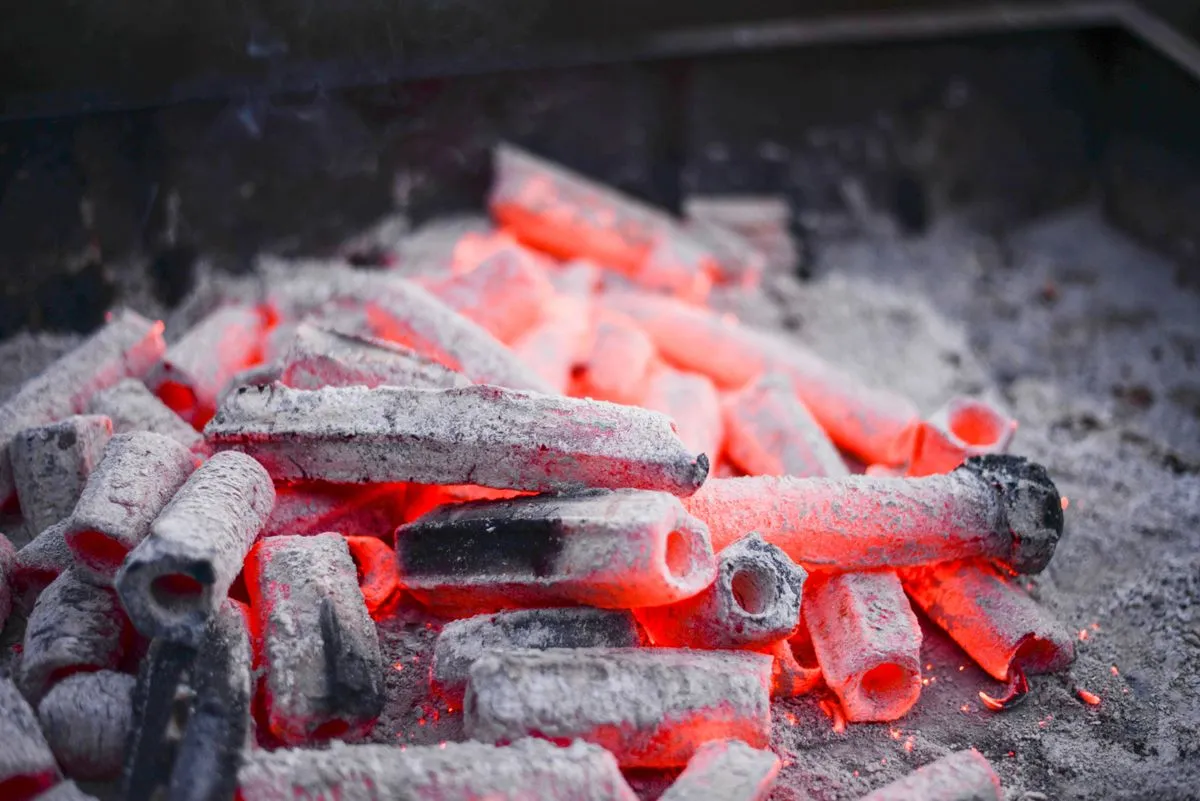
Consult the manual for an approved fuel arrangement for extended indirect cooking. Position charcoal to leave a sufficiently large area without direct coals beneath the food. A suitable drip pan may collect fat in that space, provided it sits securely and does not block the cooker airflow. The meat should not project beyond the indirect zone into the most intense heat simply because it technically fits under the lid.
Begin with a manageable cut rather than the largest roast that covers almost the entire grate. Air needs space to circulate around the food. A chamber probe at grate level helps show conditions at the cooking position rather than relying entirely on a dial high in the lid. Those readings may differ without either instrument necessarily being faulty.
Use measured wood and controlled airflow
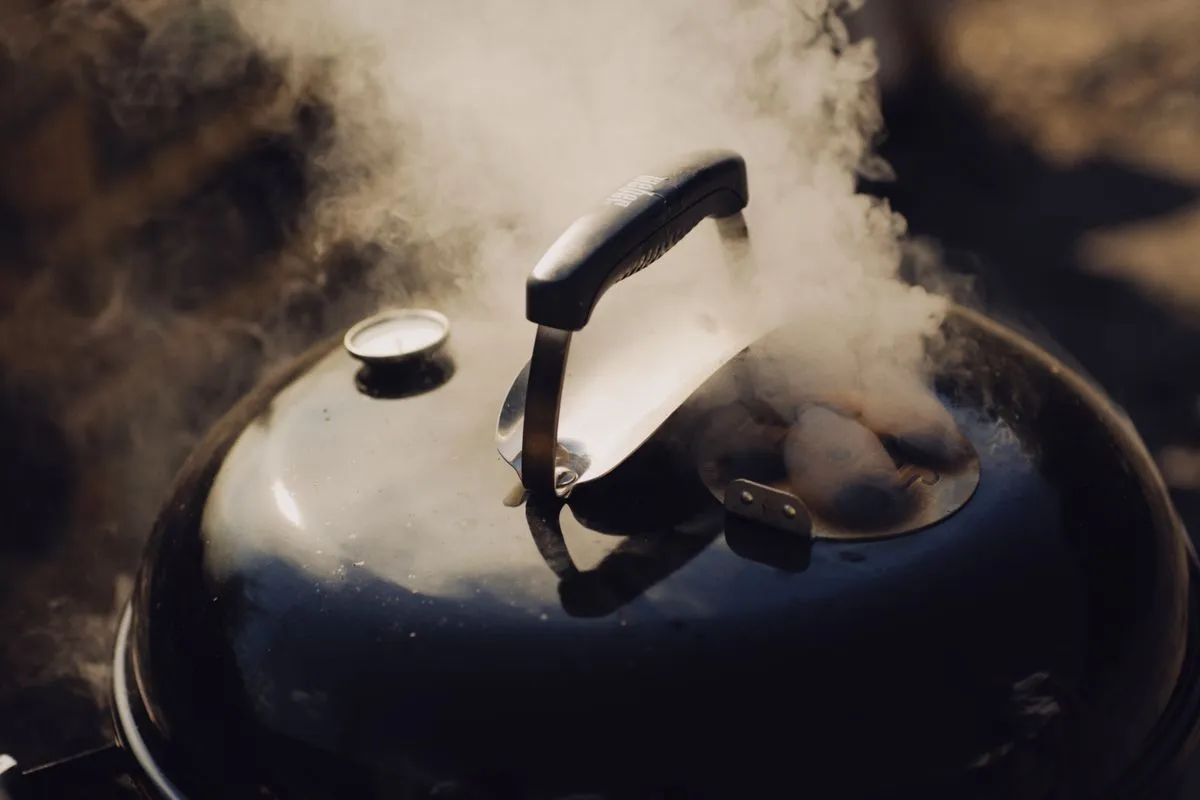
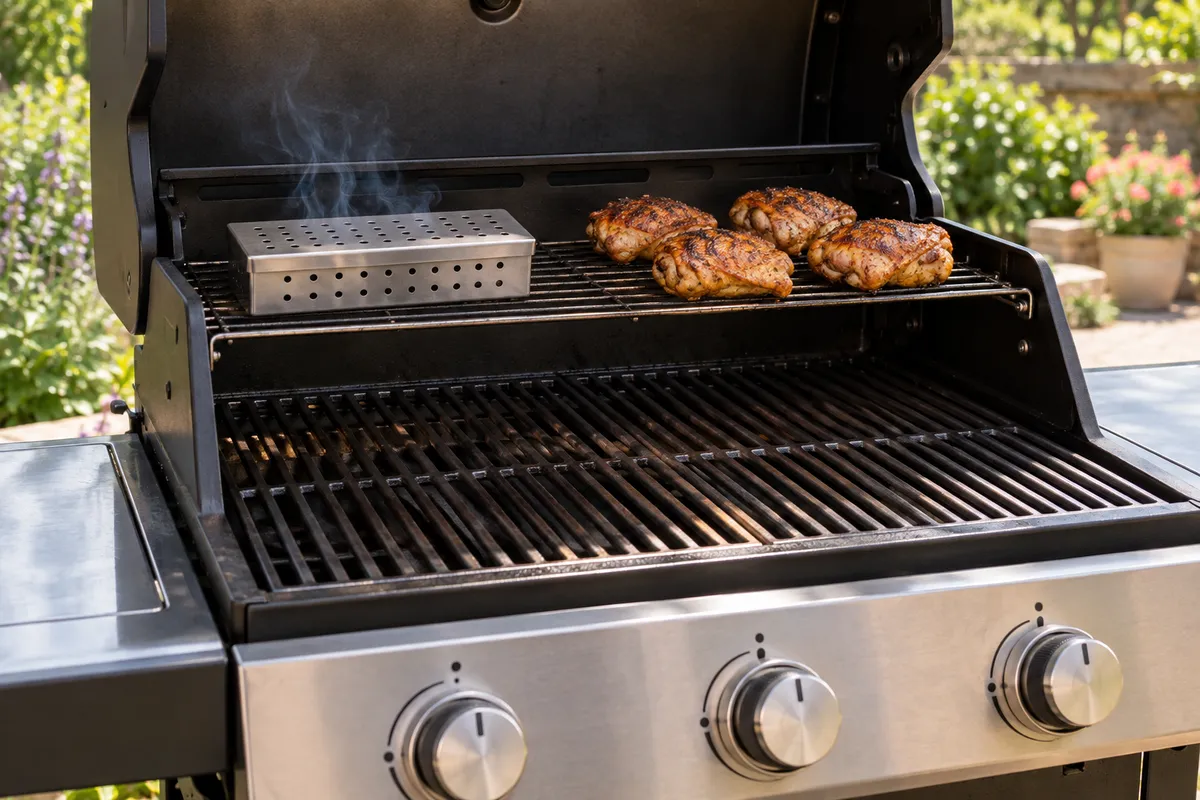
Add only smoking wood suitable for the appliance and follow the recommended placement. The kettle does not need a continuous dense cloud. Too much wood can alter the heat and create bitter flavor. Maintain airflow that supports controlled combustion, and learn how the cooker responds to small vent adjustments. Repeatedly lifting the lid changes the conditions and makes that response harder to interpret.
For hot-smoking meat and poultry, USDA guidance calls for a smoker temperature between 225°F and 300°F. This is not a cold-smoking method. Thaw meat fully and keep it refrigerated until cooking. A low target is not a reason to leave raw food in a barely warm cooker for an indefinite period. Use the recipe's method alongside a reliable chamber thermometer rather than treating the lid dial as decoration.
Monitor fuel and doneness separately
Plan how to add fuel safely before starting, using the intended grate access and suitable tools instead of lifting hot food over exposed coals. If the cooker cannot maintain its required temperature, an appropriate preheated oven can continue cooking without a long lukewarm interruption. Do not partially cook the meat and set it aside to finish much later.
Check internal temperature at appropriate points and assess the texture required by the cut. USDA minimums include 145°F plus a three-minute rest for whole cuts of beef, pork and lamb, 160°F for ground meats and 165°F for poultry. A pork shoulder intended for pulling usually needs further cooking for tenderness. Smoke color and elapsed time cannot replace those checks. After serving, deal separately with grease and completely extinguished charcoal ash.
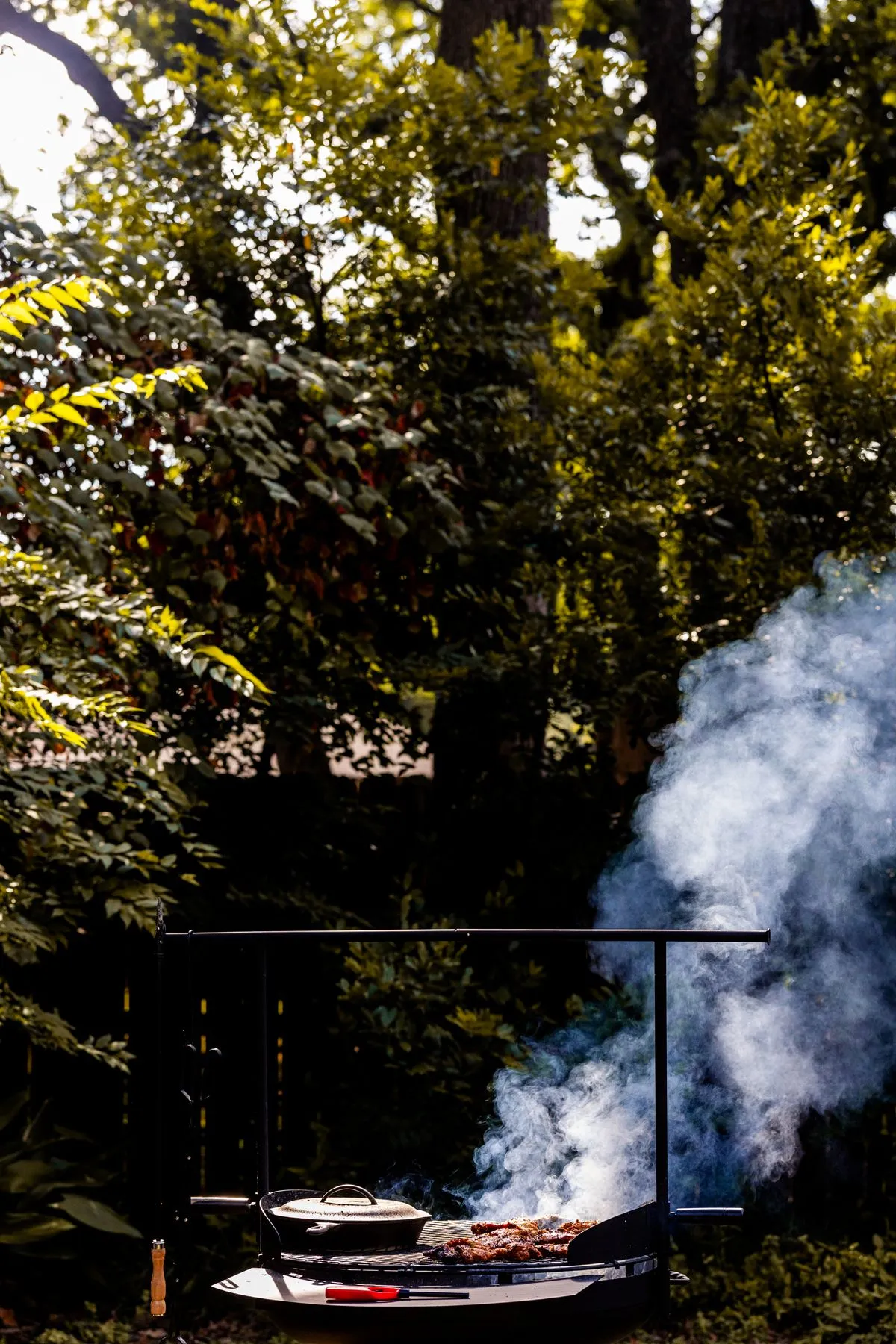
Use grilling equipment only in its intended location and follow the manufacturer’s instructions. Timing is not a substitute for checking doneness.