Start with a mild reference point
Fruitwoods such as apple are often chosen for a relatively mild smoke character, while hickory can taste more assertive. These descriptions are starting points rather than fixed flavor measurements. The same wood can produce very different results depending on quantity, airflow and cooking time. For a first comparison, a small amount of one suitable wood is more informative than a blend of several varieties.
Buy wood specifically intended for smoking food. Painted boards, pallets, glued offcuts and garden timber of uncertain treatment do not belong in the cooker. A pleasant smell does not make unknown wood food-safe. Clear suitability matters more than the idea that a free branch must provide a more authentic flavor simply because it came from a tree nearby.
Match the form to the equipment
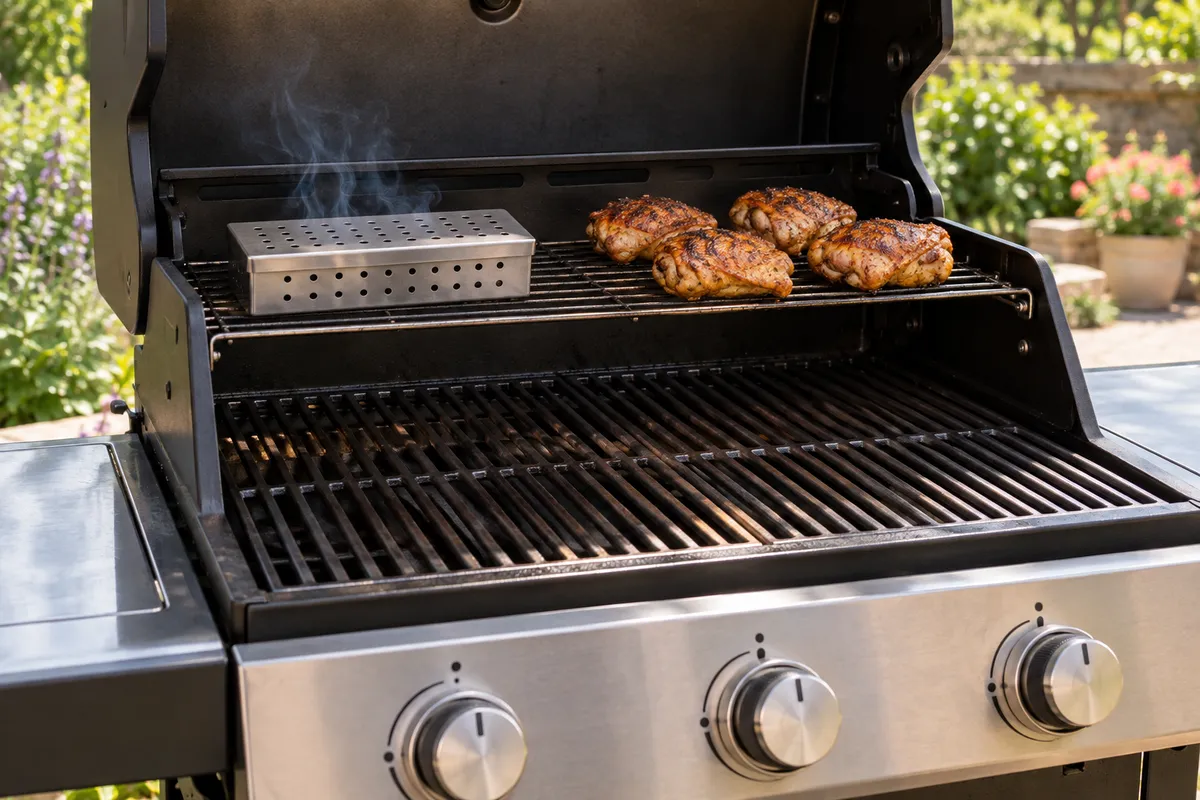
Chips, chunks and pellets are different fuel forms. A smoker box designed for chips is not automatically intended for pellets, and a pellet cooker needs the fuel specified by its manufacturer. Larger pieces may release smoke for longer, while smaller pieces respond more quickly. Placement follows the equipment instructions rather than a universal recommendation to add a handful somewhere above the heat.
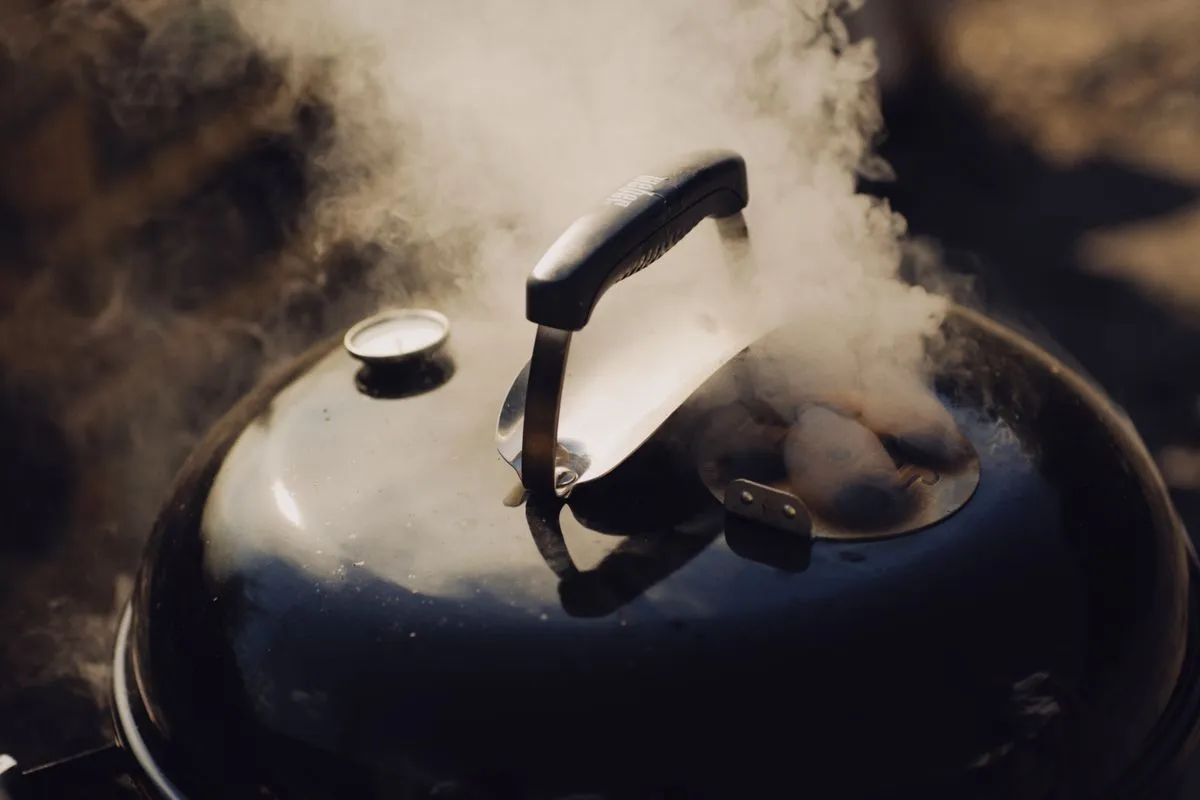
Do not soak wood automatically if the equipment directions do not call for it. Moisture changes the initial heating phase and may produce steam without guaranteeing better smoke flavor. The important aim is controlled combustion with enough air. Smothering a fire until it produces dense clouds is not a good way to make a supposedly mild wood taste stronger.
Judge smoke separately from other variables
Try a new wood with a familiar dish and keep the seasoning, temperature and portion size similar. Note the amount used and when it was added so the next cook can change one variable rather than several. A very sweet rub, a strong sauce and multiple woods at once make it difficult to identify what the smoke itself contributed.
Delicate foods such as mushrooms, fish or small poultry portions often need less exposure than a large pork shoulder. Begin conservatively and avoid continually adding wood once the desired character is present. Additional smoke does not equal additional cooking progress. Check internal temperature and texture independently: a dark exterior or pronounced smoke aroma cannot demonstrate that food has reached a safe degree of doneness.
Use grilling equipment only in its intended location and follow the manufacturer’s instructions. Timing is not a substitute for checking doneness.