Establish what the pan is meant to do
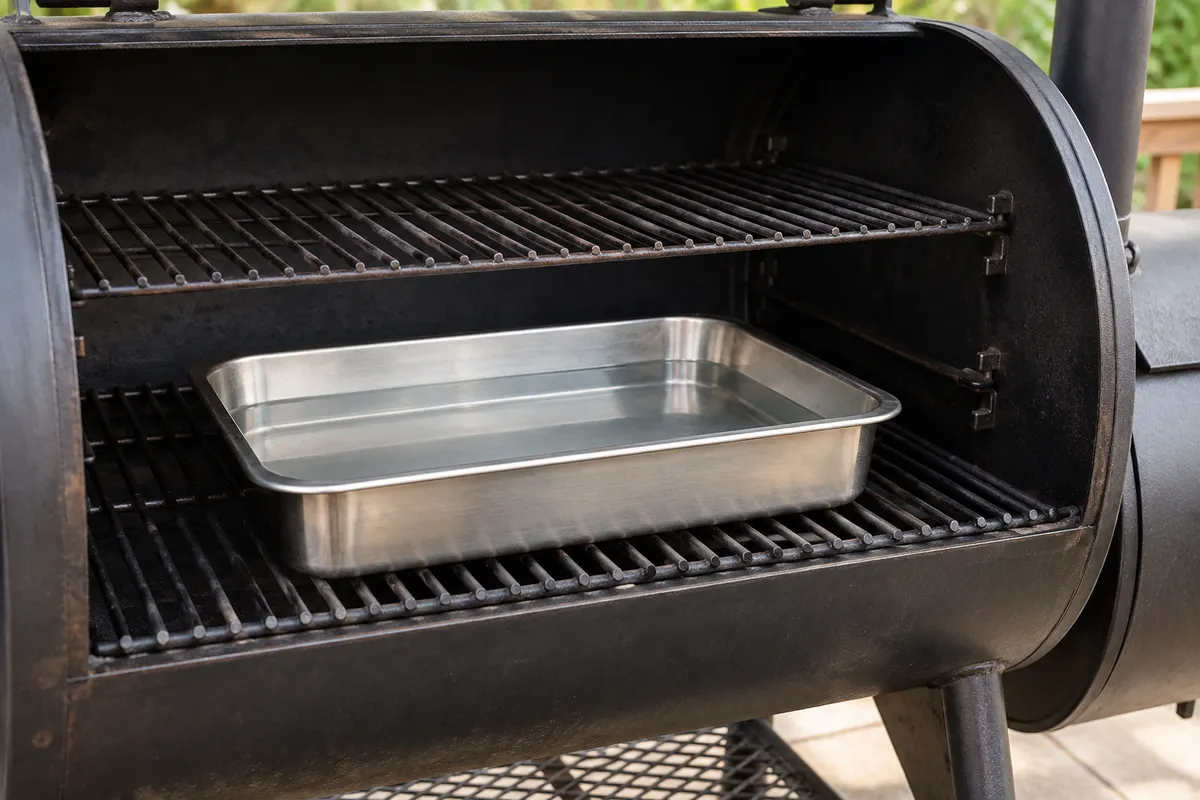
Some smokers include a water pan as an integral part of their intended arrangement. In other cookers, an additional pan is optional or not supported. Read where it may sit and what fill level is appropriate. A heavy bowl placed arbitrarily on the grate can obstruct airflow or consume the space needed to maintain an indirect cooking zone.
Water absorbs heat and evaporates, which can alter chamber behavior. It does not automatically hold the temperature at a fixed value. Fuel output still varies, and wind or an opened lid still affects conditions around the food. A thermometer near the cooking position remains necessary even when the water pan is filled correctly and appears to be working as expected.
Plan safe access for hot water
Fill and position the pan according to the manufacturer's instructions before hot grates and food make access awkward. Whether the method calls for warm or cold water depends on the appliance and process. Avoid improvised refilling that spills water onto hot ceramic, burners or charcoal. A sudden release of steam can also threaten hands and face even if no water directly touches the cook.
During longer cooks, check the need for refilling using the intended access method. An empty pan behaves differently from one holding water. Do not hurriedly pour a large amount into an overheated dry vessel. If reaching the pan requires dangerously lifting a loaded hot grate, improve the arrangement before the next cook rather than repeating the same risky maneuver every time the level drops.
Humidity is not a guarantee of juicy food
A more humid chamber cannot guarantee a juicy turkey breast or repair an overcooked piece of meat. Internal temperature, food shape and cooking duration remain important. Water below the food also does not alter the required safe minimum cooking temperature. Liquid in the pan only shows that something has collected there; it does not measure how much moisture remains inside the roast.
After the pan has cooled completely, clean it appropriately and dispose of grease under local rules. Greasy water does not belong in a storm drain. Remove deposits before the next cook reheats old residue. To compare the effect of a water pan, avoid changing fuel, wood quantity and the recipe at the same time. One controlled difference produces a more useful observation than several simultaneous changes whose effects cannot be separated afterward.
Use grilling equipment only in its intended location and follow the manufacturer’s instructions. Timing is not a substitute for checking doneness.