Look at the crust before wrapping
If the exterior of a shoulder or brisket is only beginning to develop color and seasoning adhesion, early wrapping can keep that surface soft. For a method that aims for a developed crust, wait until the exterior has reached the condition you want. Temperature, humidity and cut size influence that moment more directly than a fixed number of hours on the clock.
Wrapping may be useful when the outside is already sufficiently dark but the center still needs cooking for tenderness. It can also limit further smoke exposure once the flavor is strong enough. Not every dish benefits: crisp chicken skin tends to soften in a moist enclosure, and delicate vegetables can lose their structure faster than expected.
Use materials intended for the job
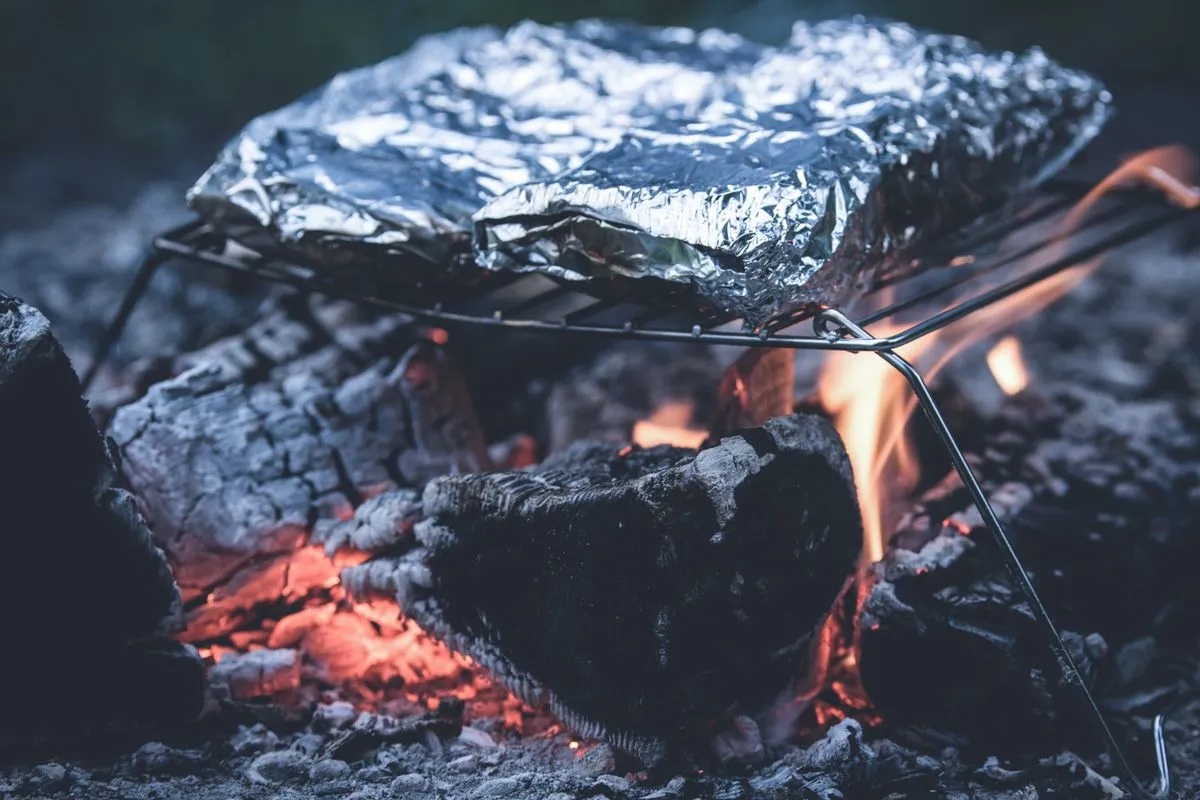
Choose materials explicitly suitable for food and the intended cooking temperature. Ordinary paper is not automatically smoking paper, and waxed paper is not a general substitute for heat-safe wrapping. Follow the product manufacturer's instructions. Aluminum foil also has compatibility limitations with acidic or very salty foods, so use an appropriate alternative or avoid direct contact as the material guidance requires.
Prepare the wrapping and a clean, stable landing surface before moving the food. Hot juices can spill while a roast is lifted. Suitable gloves and a strong board help, but they do not replace a clear route through the cooking area. Keep loose material away from flames and burners. A probe must still reach the correct part of the food without pinching or damaging its cable.
Reassess texture after opening
The wrapper may collect liquid and soften the crust. Open it carefully away from your face because steam and juices can be very hot. Where the recipe permits, a short unwrapped phase can dry the surface again. Watch closely so sugar that was protected during the wrapped stage does not suddenly scorch when exposed to more direct heat.
Wrapping does not replace safe internal temperatures or hygienic holding and storage. A package that feels warm outside is not evidence of safe hot holding throughout. Divide leftovers into smaller suitable portions for prompt cooling rather than leaving a large tightly wrapped block warm for hours. For the next trial, record the crust's condition before and after wrapping. That is more useful evidence than simply noting that the food happened to spend part of this cook inside a wrapper.
Use grilling equipment only in its intended location and follow the manufacturer’s instructions. Timing is not a substitute for checking doneness.